




Most businesses don’t fail.
They stall.
They generate revenue. They deliver results. They even grow — for a while.
But at some point, progress slows. Momentum fades. And what once worked starts breaking.
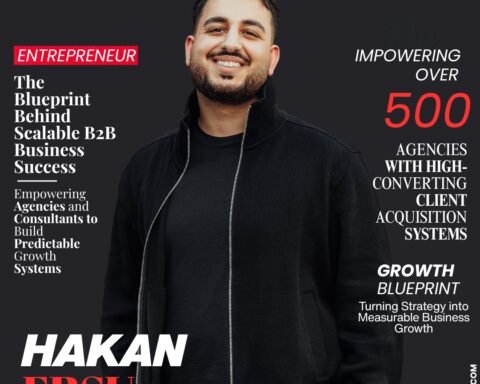
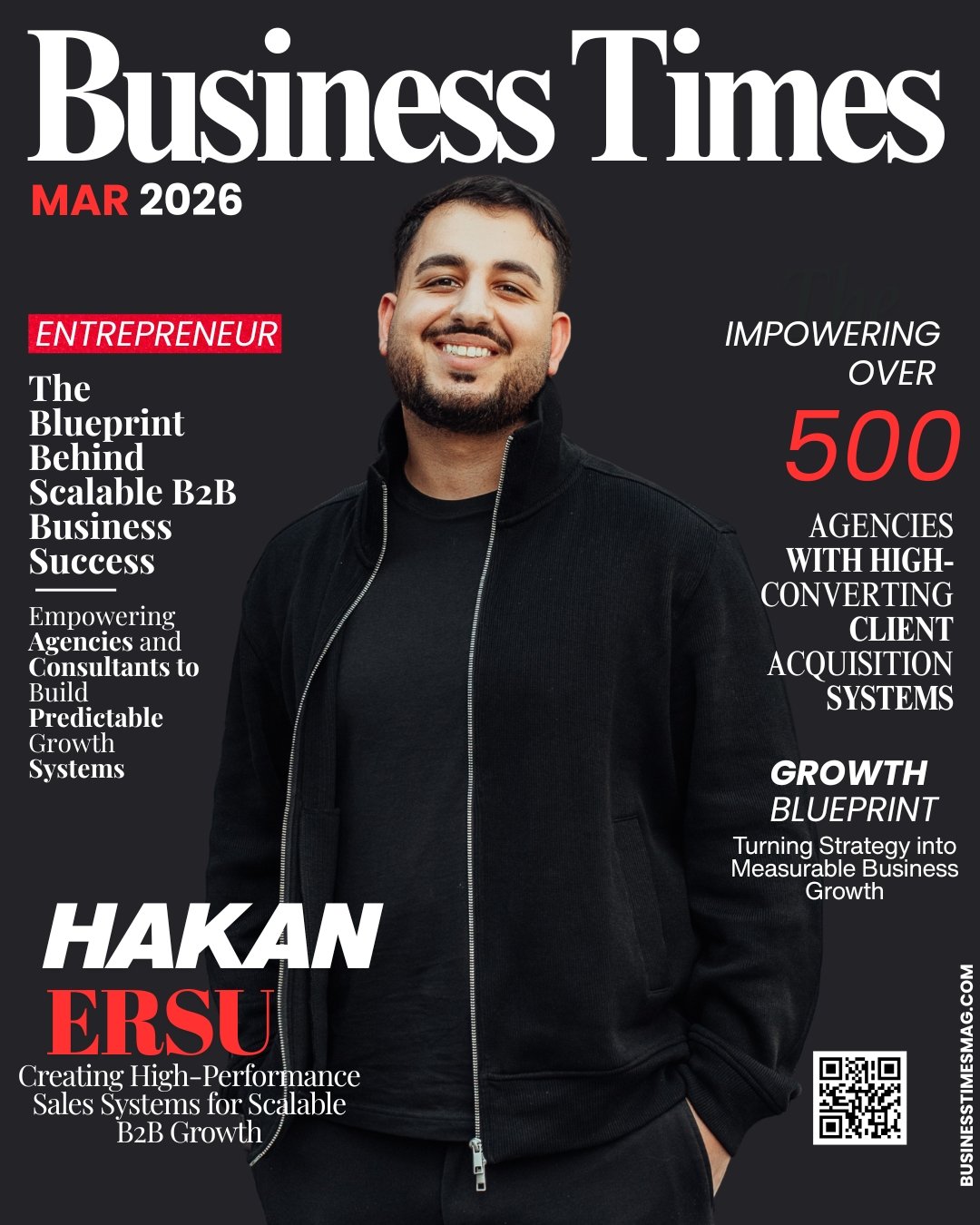
According to entrepreneur Hakan Ersu – CEO and founder of the Ersu Group and Ersu Consulting GmbH from Germany, this isn’t a coincidence.
“It’s not that these companies lack talent or capability,” he says. “They lack structure.”
And in today’s B2B landscape, structure is the difference between temporary success — and scalable growth.

Early Curiosity — And an Obsession With Systems
As a teenager, Ersu became deeply interested in digital business models.
Not in surface-level tactics — but in the mechanics behind them.
Why do some brands dominate entire markets?
Why do certain offers convert instantly while others struggle?
What actually makes something scalable?
These weren’t abstract questions. They became the foundation of how he thought.
By the time he started building his own ventures, one thing was already clear:
Success wasn’t random.
It was structured.

The First Lesson: Effort Doesn’t Scale
Ersu entered the world of digital business early — experimenting with online marketing, business models, and growth mechanics as a teenager.
But like many founders, his first real success came with a hidden problem.
The business worked.
Revenue increased.
Demand was there.
But everything depended on him.
“I was generating income, but I didn’t have a system,” he explains. “The business functioned — but it wasn’t scalable.”
This phase — what he later describes as a “golden hamster wheel” — is where many entrepreneurs get stuck:
More work leads to more revenue.
But not to more freedom.
Not to leverage.
Not to scale.

The Trap Most Entrepreneurs Don’t Recognize
Like many founders, Ersu initially built a business that worked.
Clients came in. Revenue increased. Demand was there.
But so was a hidden limitation.
Everything depended on him.
“I was in a position where the business generated money — but it wasn’t independent,” he explains. “It only worked because I was constantly involved.”
It’s a stage many entrepreneurs reach but rarely articulate:
The business grows.
But it doesn’t scale.
Ersu calls it the “golden hamster wheel” — a system that produces income, but no leverage.
Why Most B2B Companies Plateau
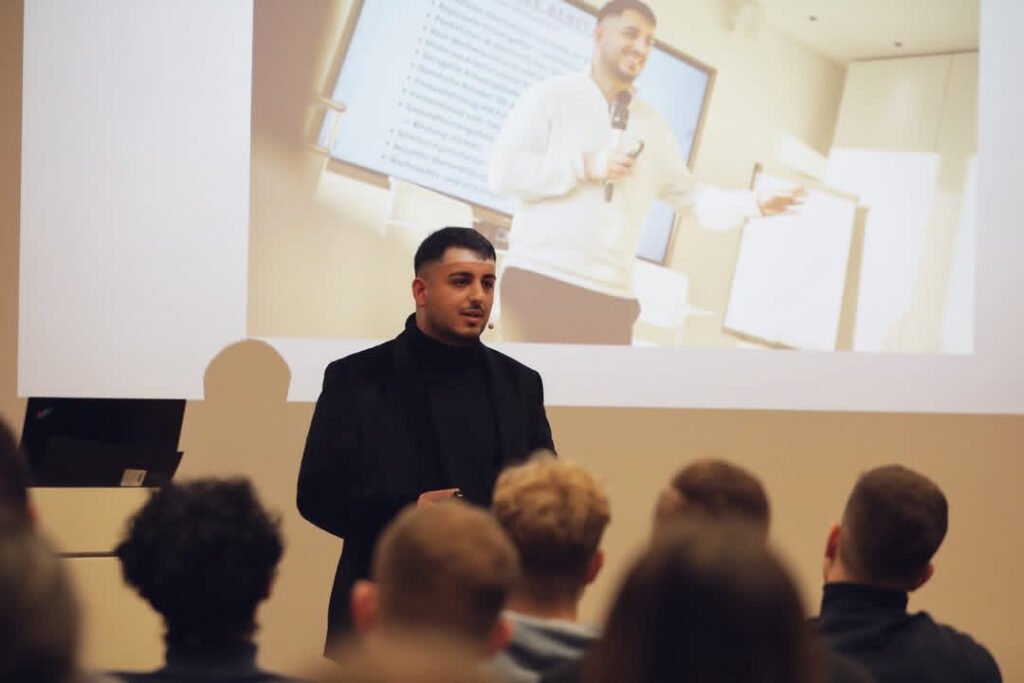
Today, Ersu sees the same pattern across agencies, consultants, and B2B service providers.
From the outside, many of these companies appear successful.
But internally, they’re fragile.
They lack:
clear positioning
defined offers
structured sales systems
scalable processes
Instead, they rely on:
referrals
inconsistent marketing
founder-driven decisions
“Most businesses aren’t designed to scale,” Ersu says. “They’re designed to function — and that’s where they stop.”

The Generalist Problem — And Why It Kills Growth
One of the biggest structural issues he identifies is what he calls the generalist trap.
Companies try to offer everything:
marketing, ads, branding, recruiting, strategy — for everyone.
The intention is clear: more services, more opportunities.
The result is the opposite.
No clear identity.
No strong positioning.
No predictable demand.
“If you’re not specific, you’re replaceable,” Ersu explains.
And in a competitive market, replaceable businesses don’t scale.
Sales Isn’t Broken — It’s Undefined
While most companies try to fix growth problems through marketing, Ersu points to a different bottleneck:
sales architecture.
“Marketing can create visibility,” he says. “But without a system behind it, that visibility doesn’t translate into consistent revenue.”
In many organizations, sales isn’t a system — it’s improvisation.
No defined process.
No structured conversion flow.
No repeatable framework.
Instead, companies rely on individuals — not infrastructure.
And that creates a ceiling.

A Contrarian Take on Selling
In an industry often driven by pressure, scripts, and urgency tactics, Ersu takes a different stance.
He doesn’t position sales as persuasion.
He positions it as alignment.
“If the offer is clear, the problem is real, and the solution is structured — the decision becomes logical,” he says.
This approach eliminates friction — not by reducing the importance of sales, but by redesigning it.
Less pressure.
More precision.
From Business Activity to Business Systems
At the core of Ersu’s work is a shift most companies never fully make:
from activity to systems.
Through his firm, Ersu Consulting, he helps B2B companies build integrated growth infrastructures that combine:
positioning
offer design
lead generation
sales processes
CRM systems and automation
team scalability
The objective isn’t short-term performance.
It’s long-term predictability.
A business that:
generates demand consistently,
converts clients systematically,
and operates independently.
Operator First — Not Just an Advisor
What separates Ersu from many in the consulting space is his role as an operator.
He’s not just advising companies — he’s building them.
As a serial entrepreneur, agency owner, and investor, he continues to develop businesses across multiple verticals, including SaaS and digital infrastructure.
“Strategy without execution is irrelevant,” he says. “And execution without structure doesn’t scale.”
That combination — strategy + execution + systems — defines his approach.

A Market Dividing Itself
The B2B and consulting markets are expanding rapidly.
But with growth comes saturation.
More providers.
More offers.
More noise.
Ersu believes the industry is approaching a clear separation point.
“Companies that rely on tactics will struggle,” he says.
“Companies that build systems will dominate.”
In his view, the future won’t be decided by who markets best — but by who structures best.
The Real Competitive Advantage: Clarity
In a world of increasing complexity, Ersu’s philosophy is built on reduction.
Fewer offers.
Clearer positioning.
Stronger systems.
“Complexity isn’t sophistication,” he says. “It’s often a sign that something isn’t defined.”
Clarity, on the other hand, compounds:
stronger messaging
higher conversions
faster decision-making
scalable operations
The Bottom Line
Ersu’s core belief is simple — but often overlooked:
Growth isn’t something you chase.
It’s something you build.
Not through tactics.
Not through trends.
But through systems.
“Success isn’t random,” he says.
“It’s engineered.”
And in a market where most businesses are still improvising, that mindset may be what separates those who grow — from those who plateau.
About Hakan Ersu
Hakan Ersu is the founder and CEO of Ersu Consulting GmbH, Scale-Flow.io and the driving force behind the Ersu Group.
As a serial entrepreneur, agency owner, and investor, he works with B2B companies, agencies, and consultants to build scalable business models, predictable client acquisition systems, and high-performance sales infrastructures.
His approach is rooted in real-world execution, data-driven strategy, and system-based growth.